
Four Simple Habits for a Happier, Healthier, and More Effective Life
What if the secret to getting more done isn't doing more, but taking better care of ourselves?
We live in a world that celebrates productivity, achievement, and constant motion. Our calendars are full, our to-do lists never seem to end, and we often measure our success by how much we accomplish.
But somewhere along the way, we may forget an important truth: Being busy is not the same as being effective, and being successful is not necessarily the same as being happy.
For much of my career, I worked in high-pressure engineering and leadership environments where deadlines were tight, expectations were high, and problems demanded immediate attention. I learned that effectiveness wasn't simply about working harder or longer. It was also about maintaining the clarity, energy, and emotional balance needed to make good decisions and support the people around me.
Over the years, through my leadership experience, more than two decades of mindfulness practice, and my study of neuroscience and positive psychology, I've come to appreciate four simple habits that can make a meaningful difference in how we feel, think, and perform.
The best part? They don't require expensive equipment, elaborate routines, or major lifestyle changes.
1. Meditation: Don't Wait Until You Need Emergency Medicine
For many years, I treated meditation almost like emergency medicine.
When I didn't get enough sleep and felt groggy, I would meditate to regain my clarity and energy. When I went through periods of intense stress or found myself on the verge of burnout, I would retreat to a monastery or attend a meditation retreat to recharge and restore my inner balance.
And it worked. Meditation helped me slow down, regain perspective, and reconnect with myself.
But over time, I came to realize something important: Meditation shouldn't just be emergency medicine. It should be part of our daily preventive care.
Just as we wouldn't expect to stay physically healthy by exercising only when we become sick, we shouldn't wait until we're overwhelmed, exhausted, or burned out to take care of our minds.
Meditation can certainly help us in moments of crisis. Even a few conscious breaths can help us settle and create space between a stressful event and our response. But its deeper value comes from regular practice.
Research suggests that consistent mindfulness practice can help reduce stress and anxiety, improve attention, and strengthen emotional regulation. Some studies also suggest that meditation may influence brain networks involved in attention, self-awareness, and emotional processing, although the long-term effects vary among individuals.
And meditation doesn't always mean sitting on a cushion for an hour.
We can incorporate small moments of mindfulness throughout the day. Before entering a difficult meeting, take three slow, conscious breaths. Before responding to an upsetting email, pause. Between activities, give yourself a moment to return to the present.
The key is to build these pauses into our daily routines rather than waiting until we're overwhelmed.
The goal isn't simply to recover from stress. It's to build the inner capacity to respond to stress before it overwhelms us.
And perhaps that's the biggest shift in my own mindfulness journey: moving from using meditation to rescue myself when life becomes overwhelming to making it a daily practice that helps me live and lead with greater presence, balance, and joy.
For additional tips on practicing mindfulness and meditation, check out my book, Mindfulness and Meditation for Busy Professionals.
2. Spend Time Outdoors: Let Sunshine Nourish Your Body and Mind
One of the simplest things we can do for our well-being is also one of the most accessible: step outside and enjoy some natural daylight.
Sunshine does much more than brighten our surroundings. It helps regulate our internal biological clock, known as the circadian rhythm, which influences when we feel awake, when we feel tired, and how well we sleep.
Getting natural daylight in the morning helps signal to our brains that it's time to be awake and alert. It also helps regulate the timing of melatonin, the hormone that signals nighttime to our bodies.
In other words, getting daylight in the morning can help us sleep better at night.
Daylight is also associated with mood regulation. Research suggests that light exposure influences biological systems involved in mood, including serotonin signaling. This may help explain why some people experience lower moods during seasons with shorter daylight hours.
And when we combine daylight with time in nature, the benefits can extend even further.
Research has linked spending time in natural environments with lower stress, improved mood, and better attention. A walk through a park, sitting under a tree, or simply stepping outside between meetings can give our minds an opportunity to rest and recover.
Yet how often do we spend our entire day indoors, moving from one meeting to another, staring at screens, without taking even a few minutes to step outside?
We don't need to make this complicated. Try spending 10–20 minutes outdoors in the morning as a starting habit, taking a short walk during lunch, or stepping outside when your mind feels overwhelmed. Even on cloudy days, natural outdoor daylight can help support our biological clock.
Sometimes, taking care of our well-being is as simple as stepping outside, looking up at the sky, breathing in the fresh air, and allowing ourselves a moment to just be.
3. Exercise: Move Your Body to Support Your Mind
We often think of exercise primarily in terms of physical health: maintaining weight, building strength, or improving cardiovascular fitness.
But movement is just as important for our brains.
Regular physical activity supports cognitive function, sleep quality, mood, and emotional well-being. Exercise can also help reduce symptoms of anxiety and depression.
When we exercise, our bodies undergo a variety of physiological changes. Physical activity can influence neurotransmitters involved in mood and motivation and support the production of brain-derived neurotrophic factor (BDNF), a protein involved in brain plasticity, learning, and memory.
Exercise can also improve our ability to manage stress and support better sleep, both of which are essential for clear thinking and emotional regulation.
And the benefits aren't limited to intense workouts.
Walking, stretching, dancing, gardening, cycling, or strength training can all contribute to our physical and mental health.
One of the biggest misconceptions about exercise is that it has to be strenuous or time-consuming to count.
In reality, consistency matters more than perfection.
If we have only ten minutes, we can take a ten-minute walk. If we've been sitting for hours, we can stand up, stretch, and move around.
Of course, longer-term health benefits generally increase as we work toward recommended levels of physical activity. But every bit of movement is a worthwhile place to begin.
The goal isn't necessarily to become an athlete. It's to make movement a natural part of our lives.
When we move our bodies, we are also taking care of our minds.
And when we feel better physically and mentally, we often have more energy, patience, and focus to bring to the people and responsibilities that matter to us.
4. Practice Gratitude: Train Your Mind to Notice What's Good
Our brains are naturally sensitive to potential threats and problems. This tendency, often called negativity bias, may have helped our ancestors survive, but it can also make it easy to overlook the positive aspects of our lives.
We might accomplish ten things in a day, yet spend the evening worrying about the one thing that went wrong.
Gratitude helps us intentionally shift our attention.
Research in positive psychology suggests that regularly practicing gratitude can improve subjective well-being and increase positive emotions, although the effects vary from person to person.
One of my favorite practices is keeping a gratitude journal.
Each day, I take time to reflect on the things I'm grateful for. They don't have to be extraordinary. Sometimes, it's a meaningful conversation, a beautiful sunrise, a kind gesture, or simply the opportunity to begin another day.
Gratitude doesn't mean ignoring our challenges or pretending everything is wonderful.
It means recognizing that even in difficult moments, there may still be something worth appreciating.
When we make gratitude a regular practice, we give ourselves more opportunities to notice what is going well rather than focusing exclusively on what is wrong.
Happiness isn't always about having more. Sometimes, it's about noticing more of what we already have.
And perhaps one of the greatest gifts of gratitude is that it reminds us that joy doesn't always have to wait until we achieve our next goal.
There is joy available in the present moment, if we learn to recognize it.
I have published several gratitude journals that provide space for you to reflect on and write down the things you're grateful for. Each journal also includes uplifting, motivational quotes to inspire you to stay positive and appreciate the good in your life.
Check them out at: https://www.amazon.com/dp/B08PDH6ZYH
The Power of Small, Consistent Habits
What I find most encouraging about these four habits is how accessible they are.
We don't need to wait until life becomes less busy, our careers become less demanding, or our circumstances become perfect.
We can begin right where we are.
Imagine starting the morning with a few minutes of meditation, stepping outside for some natural daylight, incorporating movement into the day, and ending the evening by reflecting on three things we're grateful for.
In fact, we can combine some of these practices. A mindful morning walk outdoors allows us to experience natural daylight, move our bodies, and practice being present. All at the same time.
None of these practices requires a dramatic life transformation. Yet together, they can help create a foundation for greater well-being, resilience, and effectiveness.
Of course, these habits aren't a guarantee of happiness or a substitute for professional support when it's needed. Adequate sleep, meaningful relationships, and other aspects of our health and circumstances matter, too.
But these four habits offer practical ways to care for ourselves consistently.
As leaders, parents, professionals, and human beings, we often give so much of our time and energy to others that we forget to replenish ourselves. But caring for ourselves isn't selfish. It helps us show up with greater presence, patience, and clarity for the people who depend on us.
And just as I learned through my meditation journey, we shouldn't wait until we're exhausted, overwhelmed, or on the verge of burnout to begin taking care of ourselves.
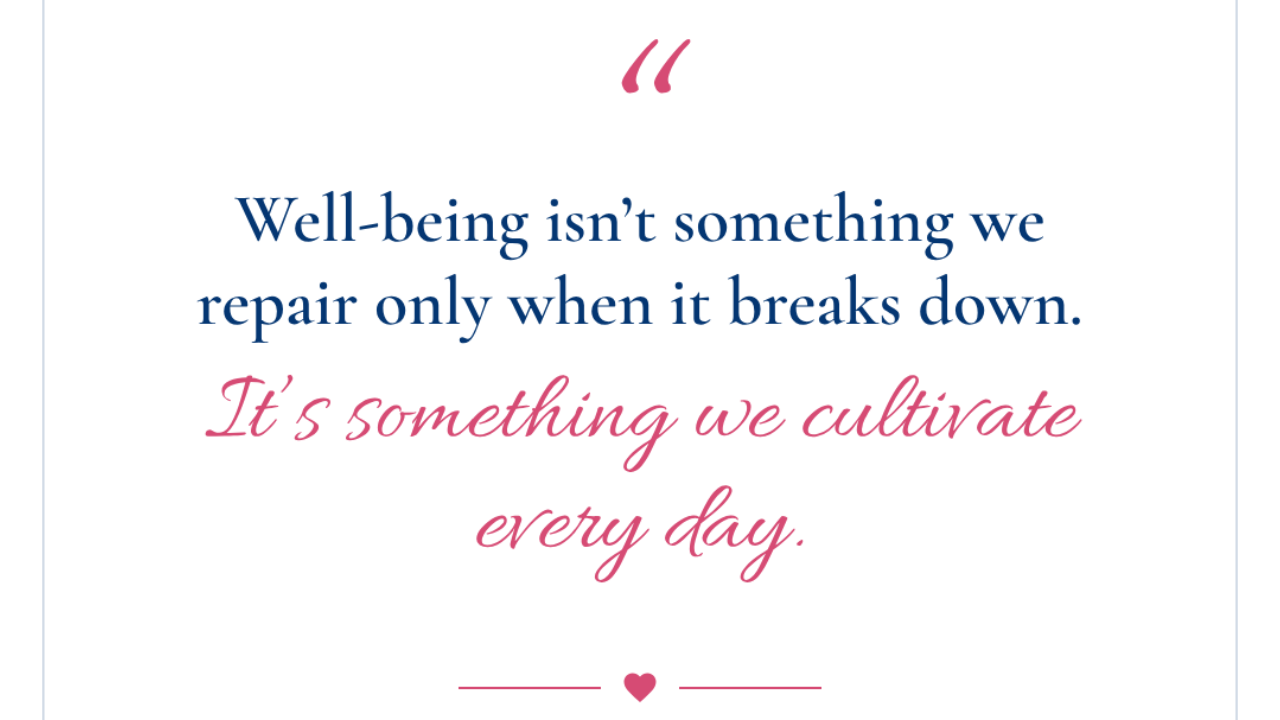
Well-being isn't something we repair only when it breaks down. It's something we cultivate every day.
And perhaps the most important lesson is this:
We don't need to do everything perfectly. We simply need to begin, one small habit at a time.
So here's my invitation to you: Choose one of these four habits and practice it consistently this week.
Which one will you start with?
With loving heart,
Thanh Nguyen at Leading with Hearts Leadership Institute
Stay connected with news and updates!
Join our mailing list to receive the latest news and updates from our team.
Don't worry, your information will not be shared.
